10 Powerful Exercises for Seniors to Boost Balance and Coordination

Disclosure: My rankings are meticulously crafted using advanced algorithms that analyze a vast number of customer reviews, assessing everything from product quality and brand reputation to customer service and popular trends. While these rankings are based on my independent evaluations and intended to serve as a helpful starting point for your shopping journey, it’s worth noting that by purchasing through my recommendations, you’ll access the best prices I’ve found. Additionally, I may earn a commission at no extra cost to you, which supports my ability to continue offering valuable insights.
Table of Contents
Introduction
Did you know that one in four seniors experiences a fall each year? 🧓 Falls aren’t just a scary thought—they can significantly impact your independence and quality of life. But here’s the good news: Staying active through simple exercises can dramatically reduce this risk and boost your overall well-being! I’m excited to guide you through 10 powerful exercises designed specifically for seniors to enhance balance and coordination. These aren’t just exercises; they’re steps toward a more stable, confident, and active life! Let’s embark on this journey together—your future self will thank you.
Understanding the Importance of Balance and Coordination in Seniors
When it comes to maintaining independence and quality of life, balance and coordination are essential. Here’s why they matter so much:
- Preventing Falls: Improved balance is your first line of defence against falls, which can lead to serious injuries. By working on your balance, you reduce this risk significantly, making everyday activities safer. A study by Dunsky (2019) highlights that balance and coordination exercises not only enhance physical stability but also improve the overall quality of life for older adults. This is crucial because it demonstrates that these exercises contribute to both physical safety and mental well-being.
- Enhancing Mobility: Better coordination allows you to move more freely and with greater ease. Whether it’s walking through the house, reaching for something on a shelf, or stepping outside, improved coordination makes it all easier. According to research by Forte et al. (2021), exercises that focus on gross-motor skills, such as those that improve coordination and agility, are particularly effective in enhancing both static and dynamic balance. This means that incorporating these exercises into your routine can significantly improve your ability to perform everyday tasks safely and efficiently.
- Boosting Confidence: When you feel stable on your feet, you’re more likely to stay active. This confidence encourages a more independent lifestyle, allowing you to engage in the activities you love without fear of falling.
- Improving Overall Health: Regular exercise isn’t just about preventing falls—it’s also crucial for your heart, muscles, and bones. Staying active supports cardiovascular health, strengthens muscles, and even enhances bone density. The study by Forte et al. (2021) further emphasizes that combining strength training with coordination exercises not only boosts balance but also improves overall muscular strength, which is vital for maintaining a healthy and active lifestyle.
- Promoting Mental Well-being: Physical activity has a profound effect on mental health. When you exercise, your body releases endorphins—those “feel-good” chemicals that can help reduce stress, lift your mood, and enhance your overall outlook on life (Dunsky, 2019).
Safety Tips Before Starting Your Exercise Routine
Before we dive into the exercises, let’s talk about safety. Your well-being is the top priority, so it’s important to take a few precautions before starting.
- Consult Your Doctor: Always check in with your healthcare provider before starting any new exercise routine. This ensures that the exercises are safe and suitable for your specific health needs.
- Choose the Right Environment: Make sure your exercise space is safe and free of clutter. Remove any rugs or objects that could cause you to trip.
- Use Support if Needed: Don’t hesitate to keep a chair or wall nearby for added stability, especially when starting out. It’s better to be safe than sorry!
- Wear Appropriate Attire: Comfortable clothing and non-slip shoes are essential. They help you move freely and safely, reducing the risk of slips or trips.
- Listen to Your Body: This is your exercise routine—if something doesn’t feel right, stop immediately. If you experience pain or dizziness, take a break and reassess before continuing.
Exercise 1: Single Leg Stands
This exercise is a fantastic starting point to improve your balance. It’s as simple as standing on one leg!
- Description: Stand on one foot while holding onto a chair for support.
- Steps:
- Stand upright behind a sturdy chair, holding onto the backrest.
- Slowly lift your right foot off the ground and balance on your left foot.
- Hold the position for 10-15 seconds, then switch legs.
- Repeat 5 times on each leg.
- Benefits: Strengthens your leg muscles and enhances balance, which is crucial for daily activities like walking.
- Modifications: If you find it difficult to maintain balance, reduce the holding time or keep both hands on the chair for added support.
Exercise 2: Heel-to-Toe Walk
Imagine walking on a tightrope—this exercise mimics that sensation and works wonders for your coordination!
- Description: Walk in a straight line, placing one foot directly in front of the other.
- Steps:
- Stand tall and place your right foot directly in front of your left foot, heel touching toes.
- Take a step forward with your left foot, placing it directly in front of your right.
- Continue this pattern for 10 steps, maintaining balance.
- Repeat the sequence 3 times.
- Benefits: Improves coordination and gait stability, making it easier to walk in a straight line and navigate narrow spaces.
- Modifications: If balance is a concern, perform this exercise alongside a wall or railing for additional support.
Exercise 3: Side Leg Raises
Side leg raises are great for strengthening your hips and improving lateral stability, which is key for maintaining balance.
- Description: Lift one leg to the side to improve balance and hip strength.
- Steps:
- Stand behind a chair, holding onto the backrest for support.
- Slowly lift your right leg to the side, keeping it straight.
- Hold for a few seconds, then lower it back down.
- Repeat 10 times on each side.
- Benefits: This exercise targets the muscles in your hips, which play a significant role in balance and stability. According to research by Forte et al. (2021), exercises that combine strength training with gross-motor skill activities, like side leg raises, are particularly effective in enhancing both static and dynamic balance. Strengthening the hip muscles through this exercise not only improves lateral stability but also contributes to better overall postural control. This makes it easier to perform daily activities safely, reducing the risk of falls and enhancing mobility.
- Modifications: If you find it challenging to lift your leg high, keep the movement small and controlled.
Exercise 4: Marching in Place
This exercise might remind you of marching bands, but it’s all about improving your coordination and stability.
- Description: Simulate a marching motion to improve coordination and stability.
- Steps:
- Stand tall with your feet hip-width apart.
- Begin to march in place, lifting your knees as high as comfortable.
- Swing your arms naturally as you march.
- Continue for 30 seconds to 1 minute.
- Benefits: Enhances the coordination between your lower and upper body, which is crucial for smooth, stable movements.
- Modifications: If balance is an issue, march while holding onto a chair for added stability.
Exercise 5: Toe and Heel Raises
Toe and heel raises are all about building strength in your lower legs, which is vital for maintaining balance.
- Description: Raise up onto your toes and rock back onto your heels.
- Steps:
- Stand behind a chair for support.
- Slowly rise onto your toes, lifting your heels off the ground.
- Lower back down and then lift your toes, rocking onto your heels.
- Repeat this sequence 10-15 times.
- Benefits: Strengthens your calf and shin muscles, improving ankle stability—a critical component of balance.
- Modifications: If you’re finding balance challenging, focus on either toe raises or heel raises until you feel more confident.
Exercise 6: Seated Marches
Seated marches are an excellent way to boost your lower body strength and coordination without putting too much pressure on your joints.
- Description: Perform a marching motion while seated to enhance lower body strength and coordination.
- Steps:
- Sit in a sturdy chair with your feet flat on the floor.
- Lift your right knee towards your chest, then lower it.
- Repeat with your left leg, mimicking a marching motion.
- Continue for 1-2 minutes.
- Benefits: Improves lower body strength and circulation while being easy on your joints.
- Modifications: If needed, slow down the pace or perform with a lower range of motion.
Exercise 7: Wall Push-Ups
Wall push-ups are a safe way to build upper body strength, which can contribute to better overall balance.
- Description: Perform push-ups against a wall to build upper body strength and stability.
- Steps:
- Stand facing a wall, with your feet shoulder-width apart.
- Place your hands on the wall at shoulder height.
- Slowly bend your elbows, bringing your chest towards the wall.
- Push back to the starting position.
- Repeat 10-15 times.
- Benefits: Strengthens your upper body muscles, which can help you catch yourself if you start to lose balance.
- Modifications: To make it easier, step closer to the wall; for a greater challenge, step further away.
Exercise 8: Standing Hip Circles
Standing hip circles help improve flexibility and balance by keeping your hips and core engaged.
- Description: Rotate your hips in a circular motion to improve flexibility and balance.
- Steps:
- Stand tall with your feet shoulder-width apart.
- Place your hands on your hips for support.
- Slowly rotate your hips in a circle, first clockwise, then counterclockwise.
- Perform 5-10 circles in each direction.
- Benefits: This exercise enhances hip flexibility and core stability, both essential for maintaining balance. The study by Forte et al. (2021) is particularly relevant here, as it highlights how exercises that target coordination and gross-motor skills can significantly improve both static and dynamic balance. By regularly practicing exercises like standing hip circles, you’re not only working on flexibility but also on enhancing your overall balance and stability.
- Modifications: If you need extra support, hold onto a chair or wall while performing the circles.
Exercise 9: Seated Leg Extensions
Seated leg extensions target your quadriceps, which are key muscles for standing up and walking.
- Description: Extend your legs while seated to strengthen the quadriceps and improve balance.
- Steps:
- Sit in a chair with your back straight and feet flat on the floor.
- Slowly extend your right leg out straight, holding for a few seconds.
- Lower it back down and repeat with the left leg.
- Perform 10-15 repetitions on each leg.
- Benefits: Strengthening your thigh muscles helps with balance during walking and standing. According to Dunsky (2019), exercises that improve balance can also enhance cognitive function in older adults. This suggests that regular practice of seated leg extensions may not only strengthen your legs but also contribute to better mental clarity and overall well-being.
- Modifications: For added resistance, you can use light ankle weights if you’re comfortable with it.
Exercise 10: Chair Stands
Chair stands are a functional exercise that mimics the motion of standing up from a seated position—something we do every day.
- Description: Practice standing up from a seated position to improve leg strength and balance.
- Steps:
- Sit in a sturdy chair with your feet flat on the floor.
- Cross your arms over your chest or keep them by your sides.
- Slowly rise to a standing position, then sit back down.
- Repeat this motion 10-15 times.
- Benefits: This exercise strengthens your leg muscles and improves balance during transitions from sitting to standing. Fang et al. (2019) conducted a systematic review that found exergaming (short for “exercise games”), which includes similar balance-enhancing activities, to be highly effective in improving balance in older adults. This indicates that exercises like chair stands, which are simple yet effective, can significantly enhance balance and reduce the risk of falls.
- Modifications: If necessary, use your hands on the chair for extra support.
Cool Down and Stretching
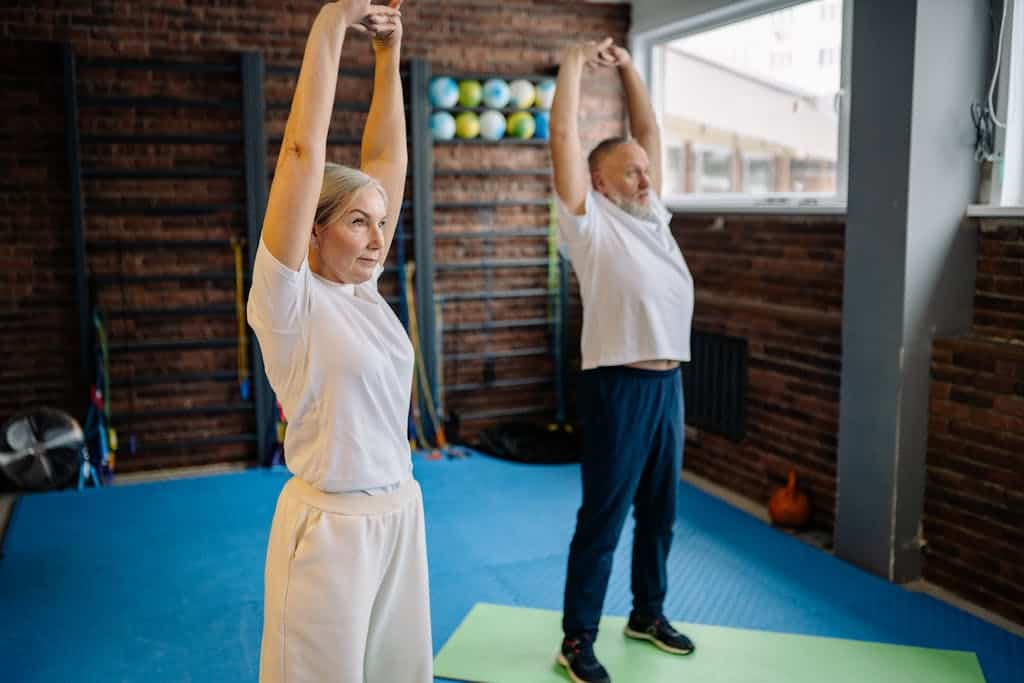
After exercising, it’s important to cool down with some gentle stretches to relax your muscles and prevent stiffness.
- Description: Gentle stretches to relax muscles after exercising.
- Steps:
- Perform neck rolls by gently rolling your head in a circle.
- Stretch your arms overhead and lean to each side.
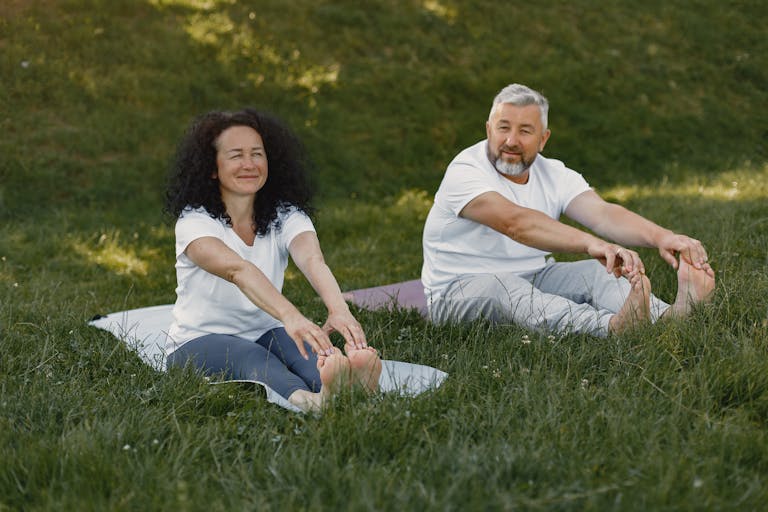
- Do gentle leg stretches by reaching for your toes while seated.
- Hold each stretch for 15-20 seconds.
- Benefits: Stretching reduces muscle soreness and improves flexibility, helping you feel more comfortable after your workout.
- Modifications: If you prefer, you can perform all stretches while seated.
Conclusion
Incorporating these exercises into your daily routine can make a world of difference in your balance, coordination, and overall well-being. Remember, consistency is key, and it’s never too late to start! Whether you’re new to exercise or looking to refine your routine, these exercises offer a safe, effective way to stay active.
As Helen Keller wisely said, “Life is either a daring adventure or nothing at all.”
So, let’s make every step count toward a healthier and more active life! Start today and feel the empowering benefits unfold. 💪
References
Dunsky, A. (2019). The effect of balance and coordination exercises on quality of life in older adults: A mini-review. Frontiers in Aging Neuroscience, 11. https://doi.org/10.3389/fnagi.2019.00318
Fang et al. (2019). Fang, Q., Ghanouni, P., Anderson, S., Touchett, H., Shirley, R., Fang, F., & Fang, C. (2019). Effects of exergaming on balance of healthy older adults: A systematic review and meta-analysis of randomized controlled trials. Games for Health Journal, 8(6), 407-423. https://doi.org/10.1089/g4h.2019.0016
Forte et al. (2021). Forte, R., Ditroilo, M., Boreham, C., & de Vito, G. (2021). Strength training and gross-motor skill exercise as interventions to improve postural control, dynamic functional balance, and strength in older individuals. The Journal of Sports Medicine and Physical Fitness. https://doi.org/10.23736/S0022-4707.21.11947-4